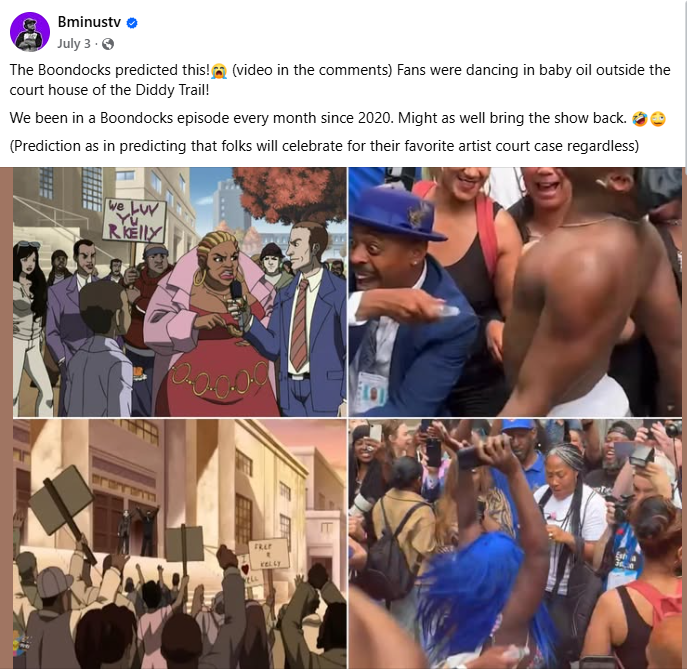
When watching cartoons, people often notice how these shows use dark humor or make a parody of real world events, famous people, or stereotypes in a joking way. However, there’s this show called The Boondocks, created by Aaron McGruder, which uses satire to discuss African American culture, politics, and social issues.It was determined through The Boondocks, he speaks of resistance, liberation, peace, harmony and does so in the “language” of African Americans- Ebonics. He places African Americans at the center of his discourse and gauges the external world through the lens of his young African American characters (Tyree and Krishnasamy) It was originally a comic strip published by McGruder. It was later adapted into a TV series in 2005, The main character in the show is Huey Freeman. Who’s actually based on a real life person named Huey P. Newton, who was an activist and a co-founder of the Black Panther Party. Besides Huey, he has a brother in the show named Riley Freeman, who represents the stereotypical image of how some people view the Black Culture in general. Acting like a gangster throughout the season. Huey and Riley Freeman live with their grandfather in the suburbs. One example of satire in the show is The Trial of R. Kelly in Season 1, Episode 2. This show makes fun of how the fans support celebrities no matter what they did wrong. In this episode, Riley supports R. Kelly even though he did wrong crimes such as sexual abuse. Huey believes people should care about what’s right and fair, meaning the supporters should pay more attention to the accusations of R. Kelly instead of ignoring the mistakes they made just because he is famous. This is Very Similar to the Diddy Verdict which happened this past Summer where people outside the court were celebrating because Diddy wasn’t guilty in one of the charges.
Furthermore, The Booondocks featured an episode that referenced Tyler Perry, but it was later banned because it portrayed what he was supposedly was behind the scenes, In Season 3 Episode 7 “Pause” The Grandfather gets a role in a play that’s written and directed by Winston Jerome (Parody of Tyler Perry) Winston Jerome also portrays a woman in one of his performances called “Ma Dukes”, similar to Tyler’s role as Madea. At first, Granddad is excited about being part of Winstone Jerome’s Production, but he soon notices that Jerome runs his shows weirdly, referencing religion, fame and controlling his cast. Later in the episode Huey becomes suspicious of Jerome’s actions and tries to warn Granddad. In the ending he realizes the situation is strange and leaves the production after Winstone Jerome proposed a sexual act. This episode revealed the truth years later where Tyler Perry was accused by an actor of sexual assault. According to Hayes,”Derek Dixon has filed a lawsuit in Los Angeles accusing Perry of using his influence in the entertainment industry to create a “coercive, sexually exploitative dynamic” while he was acting on The Oval and Ruthless”. “Dixon said he met Perry in 2019 at a work event for Tyler Perry Studios in Atlanta, and the pair talked over several months about an acting career. The lawsuit states Perry also allegedly made numerous several comments and remarks about wanting a sexual relationship, and made several advances on Dixon, which he rejected”(Hayes).
Additionally, language and culture are seen in the Boondocks through another character, Tom Dubois, an African American lawyer who’s married to a white woman and both have a mixed child together. Throughout the show he speaks the standard American English, and is often portrayed as “acting white”. His character shows how some African Americans feel the need to speak differently to be accepted in jobs where there are more white people than blacks.
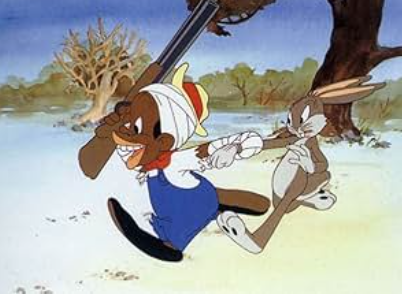
Moreover, Language and Culture in cartoons was used by making racially stereotypical episodes in the earlier days of the Looney Tunes (1930s-1950s) mocking other ethnic people. Something Known as the “Censored Eleven”. Nothing shows it’s age faster than humor. In 1968, having deemed 11 Looney Tunes and Merrie Melodies cartoons-popular in their own time two decades prior- too politically incorrect to air, United Artists withheld them from syndication. The “Censored 11” haven’t aired on TV since, but clips have crept online, giving today’s audiences a window into cringeworthy racist stereotypes once considered fit for Saturday Morning fun. A 1941 episode called “All this and Rabbit stew” showed Bugs Bunny hunted by a dim-witted, black gambler (later reimagined as Elmer Fudd).(Fitzpatrick, 2).
On the contrary, The Positive uses of language and culture and diversity in cartoons can be seen in shows for a different audience of viewers from age 4 to 7, shows like “Super Why”, “Go Diego Go”, “Doc Mcstuffins”, “Dora The Explorer”, “Sesame Street”. What all of these shows have in common is they engage the viewers through on screen questions, encouraging the target audience they’re appealing to, by responding and participating. With these cartoons showing Language and Culture, they are made to educate those viewers with language skills and problem solving throughout the show.
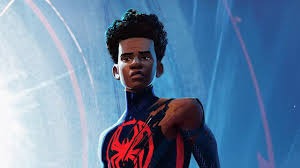
On Top Of That, Language and Culture are seen in Marvel Characters by different cultural traditions and identities, characters like Miles Morales, a different variation of Spiderman who’s Afro-Latino, highlighting Black and Latino cultures throughout the Spiderverse films, showcasing his mixed-race heritage. “Miles Morales and i will always be linked. Biracial. Black. Puerto Rican. A last name and skin color that makes people say “where are you from?” forcing an eye roll biracial kids should have had trademarked by now. Miles is all those things i am, plus a superhero. And not just any superhero. The superhero. Spider-Man. Arguably an all time comic book creation. In all the years I’ve been reading comic books, I identify with Marvel’s biracial Spider-Man more than any other character. Miles Morales-the main character in the new movie “Spider- Man: Into the Spider-Verse” not only is a pop culture representation of my youth, but the type of hero that before his creation in 2011 existed only in my imagination.”(Betancourt).
Cartoons back then were made to fit certain stereotypes for comedy, now today’s shows represent cultures more respectfully. Furthermore, cartoons that stereotyped the cultures back then was to show what was considered okay to joke about at that time, mainly the black people being targeted because of the racial prejudices back in that era where black people were treated differently, which allowed these cartoons to make fun what they look like and stereotype them based on how they act. Therefore, cartoons today try to teach and show cultures in a more positive way. Even though some old cartoons were racist, people can still find them funny today. They show what was considered normal to joke about back then. On the contrary, cartoons now show different cultures in a better way. Shows include characters of different races, languages, and backgrounds to help viewers learn more about diversity. Between the old and new cartoons shows how the time has changed and how educational or other genres of cartoons can teach people about cultures. However, Cartoons like Family Guy and South park use stereotypes and edgy humor and make fun of cultures but they do it in a way that some viewers find funny rather than offensive, using satire regarding big names such as Donald Trump and other famous figures. But these shows use comedy to talk about what’s going on in recent events in the world today.
In conclusion, Cartoons have changed from using harmful stereotypes to showing cultures in more positive ways. Shows like the boondocks use humor to highlight real issues, while others teach understanding and diversity. This change shows how cartoons reflect the evolution of society and culture and influence the way people view different ethnicities.

This entry is licensed under a Creative Commons Attribution-NonCommercial-ShareAlike 4.0 International license.

